September-October

New School Permaculture Spring Courses
Permaculture is to live in harmony with nature providing for human needs and the needs of everything around us

Permaculture Design Course (PDC) by Helder Valente and New School Permaculture Team

Permaculture Design Course
 PDC
                                            
Course by Helder Valente and
 The New School Permaculture team


Contact: maininfonsp@gmail.com


The PDC is about how can we think and act the same way as nature does, providing practical solutions to the global crises we are currently facing.

 
Permaculture is a sustainable design system that provides for human needs while having positive effects on the surrounding environment. 


Have you ever asked yourself this questions? 


How can i design my farm, my garden or my house so that i become more self sufficient?
How can i get more connected with nature and understand how it works?
In what way can i save energy on everything i do?
How can i recover and redesign areas or objects in a way that they become more ecological and nature friendly?
How can i live a more healthy life without having to buy so many chemical products?
How can i develop or be part of a network of people that is inspired to be of positive change to this world?

Did you ever found your self having this ideas?
 
I want to develop design skills and find a new way of thinking.
I want to support other people to find a way to live a low impact lifestyle  
I would like to be living connected with nature working the same way it works.
I see myself living with a community that works toguether.
I want to recover an old farm and live with what it can produce.

On this course we will answer these questions and will support  these ideas

The PDC is the course that creates the certified permaculturists, many people practice permaculture in an intuitive way with wonderfull results, on this course we learn about the thinking of permaculture, the way we look at things, so this course has the objective of changing the way we look at the world, thats why for many people its a life changing experience.

On this days we look at the story of permaculture, were it comes from and were it is going, we share the alternative ways of presenting knowledge of the new school permaculture, there is a focus to start to create the community that will live toguether until the end of the course, this is all part of the introduction to social permaculture that we cover on the early days of the course.


It is important from the beginning of the course that students understand the ethics and principles of permaculture and how ecosystems work, so we develop skills reading the landscapes, and understanding climates and microclimates on the context of natural patterns and successions .  


Building soil and soil consciousness its the base for regenerating ecosystems, thats were we move our focus wen we want to learn about creating abundant stable gardens or forests, independent of being on a urban or rural context.
We talk about land regeneration with soil building and proper water retention and management, the secrets of living water and how to regenerate deserts.

The PDC is a wonderfull course for people that like to work with plants and animals, living material as we call it, during these days we dive deep on garden design and landscaping, companion planting, food forests and animal care, we hope that by the end of this course people can design gardens and farms on the permaculture way.


One of our big goals is that our students understand and practice this new way of thinking, the way of nature, so we focus on exercises about sistemic thinking and ecological dynamics so that we can get the goals of creating a change of attitude of the way people see everything around .

The PDC its a design course so the main focus is on developing design skills in a way that students can apply sustainable strategies any place they go. 

To know more about the content of the PDC you can check:
 Bill Mollison Curriculum HERE
British Permaculture Curriculum HERE


The subjects covered during the PDC include:
  
The ethics and principles of Permaculture
Learning strategies
Educational Methods
Reading the landscape
Pattern in design
Biodiversity
Water preservation
Forest and trees
Garden Desin
Urban strategies
Soils building
Buildings and natural construction
Community development
Climates
Alternative economies

Testimonials


Diana Arhire - Moldavia

One thing was clear for me from the beginning- if among all this world pandemic chaos, all these people are still coming for the internship, across the middle of the Atlantic- it’s going to be a special one! I felt inspired, supported, understood, challenged, encouraged. As they say, every conflict is an opportunity, and if we see this pandemic as a global conflict, then it could indeed be a great opportunity- for change, for slowing down, for going deeper not further, for (inner) gardening, for Permaculture!

I’m grateful for all the amazing people I met during the courses, so many laughs, hugs, spontaneous dancing, building and burning our first fireplace. Our Perma-tribe was led by our eco-shaman Helder, the most unusual, non-conformist teacher I ever had, with his great sense of humor & observation skills, he knows how to bring out the best in people. Lots of cool (horror) stories from his many experiences around the world. Bring popcorn.

And so, brave people from 10 different countries, so different from each other, yet we got together for the same reason or cause- we want to shift from an outdated broken society model to a conscious, harmonious co-existing with Nature, where we can all be involved, from growing a pepper on your urban balcony (and maybe some guerrilla planting shhh) to regenerating soils, forest, and rivers. It’s a change of mindset where you realize (or more like you are being reminded) that ANYONE can make a change. Anyone can grow food, in any conditions. Each of us plays an important role, wherever we are, and whoever we are- a farmer with many lands, or the weirdo of the family, backpacking around the world- we are all connected in this web of transformation and we are the influence in our community or family, and nowadays, influence is power. So this Permaculture internship was for me, among other things, about Empowerment.

Empowerment and understanding the Essence- whatever the question is, the answer can be found in Nature, by observing, interacting and experimenting. We humans, as Observers, can change the world around us, thus we are creators of our own worlds (inspiration from quantum physics). When we slow down and observe Nature, we see problems as solutions, we understand the natural succession of things, where each part plays a role in the cycle of life, where there are no invasive species, just pioneer soldiers doing their job to balance something our or to regenerate damaged soils or ecosystems. By understanding the Patterns in Nature, we understand ourselves, and by understanding ourselves we move upward in the spiral of Life.

I’ve learned that Permaculture is about compassion, for all life forms- it’s empathizing with the Earth, with Nature, with the plants, with the animals, the insects, the rivers, the soils, but also with ourselves and the other humans beings across the globe. It’s a holistic approach on Life.

I’ve learned that techniques and recipes are useful but once you understand The Essence of a process, you don’t need the recipe anymore. You can make your own fertilizer, you can make your own vinegar!

I’ve learned that when working with Nature, as with people, being gentle is more important than having a lot of knowledge and experience. Mindset and attitude are more important than any material resources.

With every course of the internship it felt like I’m putting a puzzle together to finally see “the bigger picture”:

PDC design course: 

The most intense course in my opinion, touches many aspects of our lives, from good design of our gardens and lives, to patterns in nature. We started by learning about Permaculture classics and their methods, like Bill Mollison that said:

“Permaculture is a dance with Nature- in which Nature leads.”

We continued with Natural Succession, understanding the process and purpose of an eco-system, from Gramineae to forests. We studied soil composition and the importance (VERY important) of soil health in relation to balanced systems, abundant yield and sustainable agriculture. Of course we also touched classic topics like different types of composts, dry toilets, water management and household efficiency.

It wasn’t all hard work and taking notes, we also had chill open space at night and occasional movie nights when we would watch inspiring films about Permaculture projects around the world, for example the virtual tour around David Holmgren’s farm (another classic), or the online interview we had with Brian Laufer and his amazing plant collection.

Finally, we got to designing our first Permaculture project, for our first “client”- our dear host Ana, understanding her needs, vision, mission and objectives- great teamwork and very efficient Design Plan Process (OBRADIMCE)!

Another important aspect of this course for me was working on our dream project, design to details, because our dreams are the seeds of change, waiting patiently in the darkness, to be sprouting in the right conditions (inspiration from the Seeds Workshop with Pablo).


To see some more testimonials from 
our students click HERE


  • Many people look for Sustainability projects because they have a concern related with the way humans are interacting with nature and the impact they have on the planet. By being part of this movement we look to reduce our ecological footprint and develop a deeper connection with nature

  • Permaculture its a design based system that looks to create balance between man and nature by a sustainable management of resources. Permaculture its about understanding how nature works and work with nature rather than against nature. Permaculture its also a way of living based on functional design and decision making from the perspective of flow of energy.

  • By being part of the development of a permaculture project we envision to develop our capacity to become active agents of change towards a positive future. Despite all the problems in the world our choices determine our impact, by a regenerative management of our resources and materials we can create a brighter future

  • Permaculture projects have a big focus on reducing their ecological impact, the intelligent management of garbage, the production of food using organic methods and the construction of houses using local natural materials are some of the good examples that you will find, permaculture its a life changing experience and you will find many things to discover.


  • By focusing on nature we discover the importance of rhythm and seasons, often we wake up with sun rise or stop to work at sunset,we plant the seed and wait months or years to have the harvesting, understanding natural cycles its a very important part of permaculture studies and to be attuned with the energy flows of nature, deep observation its an essential part.


  • Water is the source of all life, and its availability can change dramatically from a dry climate in the desert to a wet climate in a rainforest. Proper water management becomes a priority in ecological design and to see water following a functional human designed system its a special experience.


  • By being able to close cycles we see organic garbage from the kitchen become super fertile garden compost that will then produce delicious organic food. Soil creation and improvement, its the first thing we design for when we start a new project and once it starts it never finishes.From compost to natural fertilizers, to worm farming to animal feed, there are many ways to manage the organic waste but it usually stays all the project and its all converted on precious black soil.


  • One of the great experiences in permaculture projects its to be able to eat the fruits of our work, its very usual to find large abundant vegetable gardens and diverse food forests producing a large diversity of fruits and berries .Producing its a part of it but also important its the processing of such crops.To make marmalades, vinegars, sourkrauts, jams and wines its a common experience in permaculture projects. Be ready to have great meals.


  • There are many different visions towards ecological regeneration, sometimes you find regenerative agriculture that has a special focus on animals, sometimes you find agroforestry projects that have a special focus on trees and sometimes you will find organic farming that focus on all aspects of farming, permaculture also focus on building of houses, natural architecture, how to organize social networks and project management.The main line that connects all of them its to use low impact natural methods instead of intensive short term chemical options.


  • Repair, reuse, reduce,  recycle, repurpose, that is all part of closing the cycles : To be able to have a future in harmony with the planet we need to stop exponential growth and exploitation of resources. To reduce our need for new things means to reduce the need for mining and industrial contaminating factories in poor countries, closing loops its the way to avoid that.


  • By working outside in direct contact with nature you will experience what it is to feel the wind on your face and the soil under your feet, that helps with our sense of belonging to the planet and you will find that closer connection. Nature can also be devastating and with strong energy flows, we have to be able to adapt and figure out the best way to deal with it. 


  • Natural Building is a hot topic that everyone naturally gets interested in. Everyone has the dream of a beautiful natural house in Nature. It is common to find houses made of clay, of wood, of stone and even houses of straw, it always changes with climate and available resources but the focus is always bioclimatic architecture and natural bioconstruction.


  • Animals There are people good with plants, and there are people good with animals, some people are good with both, find your place and what do you especially love. Connection with farm animals is a great way to ground the stress and to take care of a very sensitive being. By doing this we have a strong help to find where we fit.


  • By being part and helping on a permaculture project will give you some more clear ideas about how we can live in harmony with nature and how to design a future that goes from competition to cooperation, from exploitation to abundance and from egocentric to ecocentric. Take a step on this brighter future and you will see the world change around you


                        Create your path and let the path guide you


Information contact:
maininfonsp@gmail.com


Examples of previous courses:


Courses by the New School Permaculture and Helder Valente

Here are the course we teach with the
 New School Permaculture 
of Helder Valente


The Courses we teach are the following


PDC - Permaculture Design Course
PGC- Permaculture Garden Course
PVC- Permaculture Vermicompost Course
PMC-Permaculture Mushroom Course
PIC- Permaculture Introduction course
EDC - Ecovillage Design Course
SMC- Sociocracy Management Course
IPV - Inner Power Course


To get more information about our courses send an email to 
maininfonsp@gmail.com

SMC Sociocracy Management Course

Sociocracy for  
Neighborhood Organization
and social projects

What is Sociocracy?
A quick answer to the question, What is Sociocracy? is that sociocracy is both:
  • A social ideal that values equality and the rights of people to decide the conditions under which they live and work, and
  • An effective method of organizing collaborative and productive organizations as associations, businesses, and governments, large and small.
Sociocracy It is a governance system designed to protect and apply the values that democracies cherish. Unlike current democracies, it is also a governance structure designed to make sure those values will be applied as equally as possible for everyone.

What is a Sociocracy management Course?

-  Companies and Organizations:


Sociocracy creates more inclusive and efficient organizations and in the process, makes profit-making businesses more profitable and non-profit organizations more effective. Using consent and collaboration as a foundation for decision-making and communications, it builds a strong governance structure that extends from the mailroom to the boardroom and from the client to the funders. Using the new sciences of cybernetics, systems thinking, and complexity theory, it creates organizations that are as powerful, self-organizing, and self-correcting as the natural world.


-   Neighborhood Organization:   


Processes and principles from sociocracy have been used to organize neighborhoods: sociocratic elections, linked circles and grassroots power. The biggest organization of neighborhood circles is currently was organized by Father Edwin John in India: the neighborhood parliaments and the children’s parliaments having hundred thousands of members in linked (or federated) circles, empowering people to take charge of their immediate needs and resources. There are initiatives in other countries to replicate similar structures and to strengthen and revive neighborhood communities and their ability to improve their own living situation.
        +
This movie coming soon talks about the Children Parliaments: 
 http://www.powertothechildren-film.com/


With Helder Valente and
Edwin Maria John


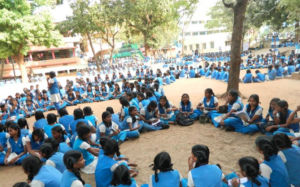
This perspective is explored by Father Edwin John, United Nations recognized leader for his work in organizing more than 100,000 "neighborhood parliaments" in southern India that use sociocracy, is coming to Greenbelt, Maryland on 4/1, on his way to participate in events at the UN.


    This is a inspiring interview Sociocracy For All did with the founder of the neighborhood and children’s parliaments, Edwin John in spring of 2017:   


What kind of knowledge I will acquire?

In these course you will:
  • Learn fundamental values, principles, processes, structures, and applications of sociocracy;
  • Participate in a sociocratic election process;
  • Explore applications relevant to your particular neighborhood and organization;
  • Meet and engage with others interested in excellent governance;


New School Permaculture sponsoring children in africa affected by ebola virus

The New School Permaculture is helping  sponsor
the education of children affected by the ebola virus in Sierra Leone  

 Become part of our Community Supported Education program and help giving a future for this children. We are developing this project in support of Laura Petkute and Mohamed Papa Bangur
and their non formal organization Access to education Sierra Leone

2 years ago Access to education Sierra Leone sent first payments for the school fees of children and now 15 children have finished this time and we want to raise more funds to pay for school fees for them to continue education
For one year in school it is about 40 pounds which is around 45 euros. With this money a child receives uniform, school materials and a scholarship payment to the school...

If you would like to support our Community Supported Education program and help this children please make your donation to:


 Aminata Sesay, age 12

Aminata Sesay lost his father a year befor the Ebola outbreak her mother was taking care of four of them , her mother was infected during the Ebola and died their step mother is an old woman that is now looking after them and could not aford to send them to school since the death of their mother in 2014

 Present Sponsorship will end soon 
For Aminata Sesay
 ----------------------------------------------------------------------------------------------------------


 Ibriham Kanu age 9 year

Ibriham Kanu class 4, lost his Dad during the Ebola virus and his mum is poor and can not aford to send Ibriham and his brothers to school and decided to send Ibriham to his grandmother , Ibriham grandma can not send Ibriham to school as well and later approach me and explained the story to me I made follow up and I see the reality of the story , Ibriham was send back to school by Access to Education for young people in Sierra Leone last year and he is doing very well in school

 Sponsorship will end soon   
For Ibriham Kanu
----------------------------------------------------------------------------------------------------------

 
 Aminata Bundu Kamara, age 15

Aminata Bundu Kamara ' s Parents were the first to contacted the virus and died in the Masuba section , Aminata Mum was a palm wine seller while her father was a carpenter who does wood work , they contacted the virus after caring for a nurse woman who contacted the virus in Bo and came to makeni , a week later after the nurse woman left for her home town Aminata ' s father fall sick and died after two weeks a week later her Mum fall sick and died after 3 days , that was in September 2014 , four of Aminata family died including Mother , father Auntie and one uncle but grandma survive but she is an old and poor woman who can not even put food on table

Sponsorship will end soon  
For   Aminata Bundu Kamara
----------------------------------------------------------------------------------------------------------


 Kadiatu Sesay, younger sister of Aminata Sesay, age 8

Sponsorship will end soon   
For  Kadiatu Sesay
 ----------------------------------------------------------------------------------------------------------


  Michael Fornah, 8 years old

Michael Fornah is in class 3 now , he lost both parent during the Ebola , it was his dad who first contact the virus and his mother was taking caring of his Dad , a week later after the death of his dad Michael became sick and his mother took him to Government hospital it was in October 2014 they were kept there for two weeks and later confirm that both Michael and his mum have been infected with the virus , on the way to Kailahun in the Eastern part of Sierra Leone were the only treatment center was, his mother died on the way , of which no one knows where she was buried

Michael was taken to the treatment center were he spent 4 weeks without his mum and Dad , after the four weeks he was brought to makeni and handed him over to his aunt after two weeks Michael started vomiting again and he was taken again to the hospital where he spent another 21 days after he get better he was brought back home to his aunt , his aunt is also a poor widow who lost his husband 5 years ago she can not aford to send her own children and Michael

In 2015 Michael became one of the first benefic beneficiaries to be send to school by Access to Education and he is now doing well in school he is in class 3 

Michael Fornah was
 NEW SCHOOL PERMACULTURE
 and will continue in school

----------------------------------------------------------------------------------------------------------

If you would like to support our Community Supported Education program and help this children please make your donation to:


If you want to donate direct to  Laura Petkute and Mohamed Papa Bangur
and their non formal organization Access to education Sierra Leone
you can do it here

Here is a video about the work that has been developed on in sierra leone check this video


Share with your friends

Permaculture is to create paradise on earth starting at the kitchen garden