
Sociocracy Management Course
(SMC)
Urubamba - Sacred Valley - Peru 23 to 27 May 2018

Course taught by Edwin John of Neighborhood Circles
(SMC)
Urubamba - Sacred Valley - Peru 23 to 27 May 2018

Course taught by Edwin John of Neighborhood Circles
and Helder Valente of the New School Permaculture
Neighborhood Organization
and social projects
and social projects

What is Sociocracy?
A quick answer to the question, What is Sociocracy? is that sociocracy is both:
A social ideal that values equality and the rights of people to decide the conditions under which they live and work
An effective method of organizing collaborative and productive organizations as associations, businesses, and governments, large and small.
A social ideal that values equality and the rights of people to decide the conditions under which they live and work
An effective method of organizing collaborative and productive organizations as associations, businesses, and governments, large and small.
Sociocracy It is a governance system designed to protect and apply the values that democracies cherish. Unlike current democracies, it is also a governance structure designed to make sure those values will be applied as equally as possible for everyone.
What is a Sociocracy management Course?
- Companies and Organizations:
Sociocracy creates more inclusive and efficient organizations and in the process, makes profit-making businesses more profitable and non-profit organizations more effective. Using consent and collaboration as a foundation for decision-making and communications, it builds a strong governance structure that extends from the mailroom to the boardroom and from the client to the funders. Using the new sciences of cybernetics, systems thinking, and complexity theory, it creates organizations that are as powerful, self-organizing, and self-correcting as the natural world.
- Neighborhood Organization:
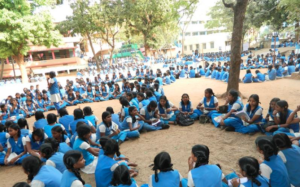
Processes and principles from sociocracy have been used to organize neighborhoods: sociocratic elections, linked circles and grassroots power. The biggest organization of neighborhood circles is currently was organized by Father Edwin John in India: the neighborhood parliaments and the children’s parliaments having hundred thousands of members in linked (or federated) circles, empowering people to take charge of their immediate needs and resources. There are initiatives in other countries to replicate similar structures and to strengthen and revive neighborhood communities and their ability to improve their own living situation.

 +
+
This movie coming soon talks about the Children Parliaments:

This perspective will be explored in the course by Father Edwin John, United Nations recognized leader for his work in organizing more than 100,000 "neighborhood parliaments" in southern India that use sociocracy, is coming to Greenbelt, Maryland on 4/1, on his way to participate in events at the UN.
Facebook Profile: https://www.facebook.com/edwin.m.john.31
This is a inspiring interview Sociocracy For All did with the founder of the neighborhood and children’s parliaments, Edwin John in spring of 2017:
What kind of knowledge I will acquire?
In these course you will :
Learn fundamental values, principles, processes, structures, and applications of sociocracy;
Learn fundamental values, principles, processes, structures, and applications of sociocracy;
Participate in a sociocratic election process;
Explore applications relevant to your particular neighborhood and organization;
Meet and engage with others interested in excellent governance;
Learn how to organize circles, double link, consents and elections.
Explore applications relevant to your particular neighborhood and organization;
Meet and engage with others interested in excellent governance;
Learn how to organize circles, double link, consents and elections.
- Here you can find many vídeos about Sociocracy:
https://www.youtube.com/channel/UCJhU0G6Hm2-Xk8T7BvpKhRw/videos
https://www.youtube.com/watch?v=QE4KwTv2QwI
https://www.youtube.com/watch?v=l3zFWpntExg
Course will be at refugio Tikabamba
https://www.facebook.com/tikabamba/?ref=br_rshttps://wwwrefugiotikabamba.blogspot.com/
HELDER VALENTE


To see testimonials from our students
click HERE
Helder studied and worked with pioneers like Bill Mollison and Geoff Lawton in Turkey, Doug Bullock in the Amazon, Rosemary Morrow in Austria, Graham Bell in Scotland, Darren dougherty, Ernst Gotcsh, Sepp Holzer in Portugal and many others in countries like Haiti, Canada, Egipt, Finland, Peru, always learning and practicing this sustainable design methods.
While living in the city he dedicated 5 years on developing urban permaculture projects and for the last 5 years traveling and developing permaculture institutes around the world.
It all started in 2009 teaching permaculture to students at the agriculture university and since then learning and teaching in many different climates and getting to know the old ways and new ways of sharing information.

By December 2012 in the Peruvian Amazon working in support to the shipibo indigenous communities Helder created the New School Permaculture and is now developing alternative educational methods.
In 2013 the New School has been presenting at the IPC International Permaculture congress in Cuba and its often invited for lectures at the European Permaculture Congress and many universities worldwide.
The New School Permaculture uses creative and inspiring educational tools that enable the students to empower each other in a way that many people have never experienced in their lives before.
To see testimonials from our students
click HERE
The course is presented by creative non formal education methods, that are based on creating a bridge between the right and left side of the brain, so that the analytical and creative abilities of the students get fully stimulated and get the most out of the experience...for many people is the most empowering and inspiring transformative process of their lives...and they carry this with them every were they go....and thats our goal.
INFO
Contacto:
maininfonsp@gmail.com


There will be some early bird discounts for people that sign up in advance

Code is tikafamily
--------------------------------------------------------------------------------------
En castellano

:: CURSO DE SOCIOCRACIA ::
Refugio Tikabamba en Urubamba,
Valle Sagrado de los Incas, Perú
Del 23 al 27 de maio de 2018.
------------------------------------------------------------------------------------------
:: Qué es la Sociocracia y como se aplica à Organización Comunitaria? ::
La Sociocracia es un modo de toma de decisiones y de gobierno que permite a una organización, sea cual sea su tamaño —desde una familia a un país— comportarse como un organismo vivo interdependente, auto-organizarse y auto-regularse.
El objetivo más importante es a partir de un enfoque sistêmico desarrollar la co-participación y co-responsabilidad de los actores. Otorgando poder a la inteligencia colectiva en busca del éxito de la organización y aportando una vía para aumentar el compromiso, resiliencia de la comunidad, coherencia, transparencia, la inclusión y la responsabilidad.
La organización más grande de círculos vecinales actualmente es organizada por el padre Edwin John en India: los Parlamentos Vecinales y los Parlamentos de Ninos tienen cientos de miles de miembros en círculos vinculados (o federados), que facultan a las personas a hacerse cargo de sus necesidades y recursos inmediatos. Existen iniciativas en otros países para replicar estructuras similares y para fortalecer y reactivar las comunidades vecinales y su capacidad para mejorar su propia situación de vida.
----------------------------------------------------------------------------------------
:: PROGRAMA DEL CURSO ::
- Valores fundamentales, princípios, processos, estruturas e aplicaciones de la Sociocracia;
- Elecciones;
- Consenso y Consentimiento;
- Aplicaciones relevantes para su comunidad e organización;
- Organizar circulos en geral;
- Círculos de barrio;
- Cómo crear parlamentos vecinales y gobiernos de base;
- Estrategias para estructuras de gobierno local;
- Parlamentos de niños e de mujeres;
- Alineando comunidades e sus interes;
- Conectando instituiciones locales y comunidads;
- Desarrollar y diseñar parlamentos para escuelas locales para el cambio climático;
------------------------------------------------------------------------------------------
:: FACILITADOR ::
Edwin Maria John of Neighborhood Community Network (NCN)
Apoio de Helder Valente de New School Permaculture
Edwin Maria John, es un líder reconocido de las Naciones Unidas por su trabajo en la organización de más de 100.000 "parlamentos vecinales" en el sur de la India que usan la sociocracia. Él es parte de Neighborhood Community Network (NCN), una organización no gubernamental, fundada en Telengana, India, y ahora disfruta de un estatus consultivo especial con ECOSOC de la ONU. NCN trabaja para una federación global de varios niveles de parlamentos vecinales de unas 30 familias cada uno para garantizar estructuras viables para la democracia participativa y el desarrollo sostenible, fomentando la rendición de cuentas hacia abajo para trabajar hacia una sociedad justa y equitativa. Su trabajo ha inspirado la formación de cientos de miles de unidades de mujeres, niños y jóvenes en la vecindad en la India y algunos otros países. Tamilnadu- Pondicherry State Parliament of Children, promovido por NCN, ganó el premio mundial UN-San Marino Alexander Bodini por la mejor organización dirigida por niños para la acción por los derechos del niño.
Para más, haga clic
www.childrenparliament.in,
www.neighborhoodparliament.org,
http://www.neighbourhoodization.org/,
Assista aqui Edwin hablando sobre su trabajo:
https://www.youtube.com/watch?v=-Tdzf9kOPUQ
https://www.youtube.com/watch?v=D5OIi94
-----------------------------------------------------------------------------------------
:: APORTE ECONOMICO ::
Costo por persona S/. 700 (Solo hasta 10 de maio)
Costo por grupo desde 3 personas S/. 600 (Solo hasta 10 de maio)
(incluye:
- 5 noches de alojamiento
- Alimentación vegetariana completa
- Curso
------------------------------------------------------------------------------------------
:: LOCALIZACIÓN::
Refugio T`ikabamba,
Sector Q'erocancha, Paradero La Capilla,
Urubamba, Valle Sagrado de los Incas, Perú
https://www.google.com/maps/place/Refugio+T%60ikabamba/@-13.2888527,-72.1375175,17z/data=!4m12
------------------------------------------------------------------------------------------
:: Inscríbete e escríbenos a:
proyectotierra17@gmail.com
Contacto: +51 984760624 (whatsapp)
Te esperamos para este grand evento para aprender sobre vida en comunidad con un grand maestro!
Facilitado por Helder Valente y amigos de la Permacultura New School.
Helder estudió y trabajó con pioneros como Bill Mollison, Sepp Holzer, Doug Bullock, Rosemary Morrow, Darren dougherty, Ernst Gotsh y otros, y ahora enseña en todo el mundo.
Se inició en 2009 con la enseñanza de la permacultura a estudiantes en la Universidad Agrícola y desde entonces continúa el aprendizaje y la enseñanza en muchos climas diferentes.
Mientras vivía en la ciudad dedicó 3 años al desarrollo de un proyecto de permacultura urbana en el centro de Lisboa y co-creó el Instituto de Permacultura Portugués.
Así es como empezó todo.
Helder nunca se detuvo y estos últimos meses pasó su tiempo de trabajo con los agricultores quechuas en los Andes, el diseño de proyectos en la selva amazónica y ecoaldeas como Findhorn.
Muy recientemente, fue uno de los presentadores en el IPC Convergencia Internacional de Permacultura en La Habana Cuba
Este curso esta centrado en las necesidades del
estudiante. Se presenta a traves de educación creativa no-formal,
metodos basados en crear un puente entre el lado izquierdo y derecho del
cerebro; buscando de esta forma estimular las habilidades creativas y
analiticas del estudiante y obtener lo mejor de la experiencia .
Para alguna gente este puede ser un proceso
transformativo extremadamente empoderador e inspiracional en sus vidas y
podran llevarlo consigo a donde vayan despues…. esta es nuestra misión.
Cualquiera que sean tus planes al futuro, este curso
de Diseño en Permacultura te proporcionara las herramientas y
perspectiva necesarias para encontrar soluciones positivas en la
busqueda de una vida sostenible que busca crear abundancia en todos los
organismos y sistemas naturales.
La certificación del Diseño en Permacultura engloba
el cómo podemos utilizar las herramientas y las tecnologías apropiadas
de hoy en día para dar forma a un mundo regenerativo y más equitativo
para todas las especies.
Permacultura, es algo más que plantar un jardín o elementos del paisaje de manera aislada. Se trata de un enfoque de un sistema de diseño sostenible que sea aplicable en todas las actividades humanas. Un jardín orgánico es sólo uno entre tantos elementos a considerar para el diseño de un hogar. Permacultura atiende la ubicación de los elementos del diseño en relación a otros como la vivienda, la topografía del lugar, el clima, el agua que escurre, la vegetación, los animales, las capacidades de los usuarios, de dónde viene el dinero para financiarlo, cuales son los materiales disponibles para construir, etc.
Permacultura, es algo más que plantar un jardín o elementos del paisaje de manera aislada. Se trata de un enfoque de un sistema de diseño sostenible que sea aplicable en todas las actividades humanas. Un jardín orgánico es sólo uno entre tantos elementos a considerar para el diseño de un hogar. Permacultura atiende la ubicación de los elementos del diseño en relación a otros como la vivienda, la topografía del lugar, el clima, el agua que escurre, la vegetación, los animales, las capacidades de los usuarios, de dónde viene el dinero para financiarlo, cuales son los materiales disponibles para construir, etc.
El objetivo del PDC es dar un conocimiento y
entendimiento amplio sobre los temas contenidos en el libro
“Permaculture: A Designers´ Manual” de Bill Mollison así como las
técnicas de agricultura regenerativa, keyline, para ser un diseñador de
sistemas permaculturales, además de promover un cambio de actitud hacia
una cultura regenerativa de baja energía.
Dirigido a todas las personas interesadas en
profundizar sobre el sistema de diseño Permacultura en sus casas,
predios o terrenos, granjas, chacras, fincas, ecoaldeas, comunidades o
simplemente interesados en aprender en cómo llevar una vida en armonía
con la Naturaleza. Sin importar el nivel de estudios o experiencia
previa. El curso conduce al internacionalmente reconocido Certificado de
Diseño en Permacultura (PDC)
El curso es impartido por Helder Valente de New
School Permaculture. Helder estudió y trabajó con Bill Mollison, Sepp
Holzer, Doug Bullock, Rosemary Morrow, Darren dougherty, Ernst Gotsh
entre otros y ahora se dedica a difundir este conocimiento alrededor del
mundo.
El empezó en 2009 enseñando Permacultura a
estudiantes de Universidades y desde alli viene haciendolo en diferentes
climas y latitudes del mundo.
Mientras vivia en la ciudad se dedico a desarrollar
durante 3 años proyectos de Permacultura Urbana en el centro de Lisboa y
Co-creo el Instituto Portugues de Permacultura. Este proceso nunca
terminó y viene diseñando proyectos en los Andes y la Amazonia en
America Latina
Qué Traer??
-Lo necesario para tomar notas como: libreta, lápices, plumones de colores, regla, etc.
-Ropa cómoda
-Linterna.
-Termo o botella para beber líquidos.
-Repelente
-Semillas para intercambiar, Buena música, cámara
fotográfica, botella de lo que te guste tomar y que quieras compartir
con los otros participantes, instrumento que sepas tocar, energía
positiva, ganas de aprender y divertirte.
-BUENA ACTITUD.
INFO Contacto:
maininfonsp@gmail.com
maininfonsp@gmail.com


